
Introduction to Bowtie
Bowtie is a barrier-based risk management model designed to support the identification, assessment, and control of risk. Because of its clear and visual structure, it is widely used by organisations across multiple industries to communicate and manage safety risks effectively.
This guide explains:
- What a bowtie can be used for
- How it can help your organisation
- The methodology behind the model
- What to look for when reviewing a bowtie model
The assessment of bowtie elements helps identify safety priorities and risk improvement areas. While the methodology can be applied without dedicated software, but BowTie Pro™ allow models to be easily edited, updated, and exported in various formats, ensuring outputs are accessible to all levels of the organisation.
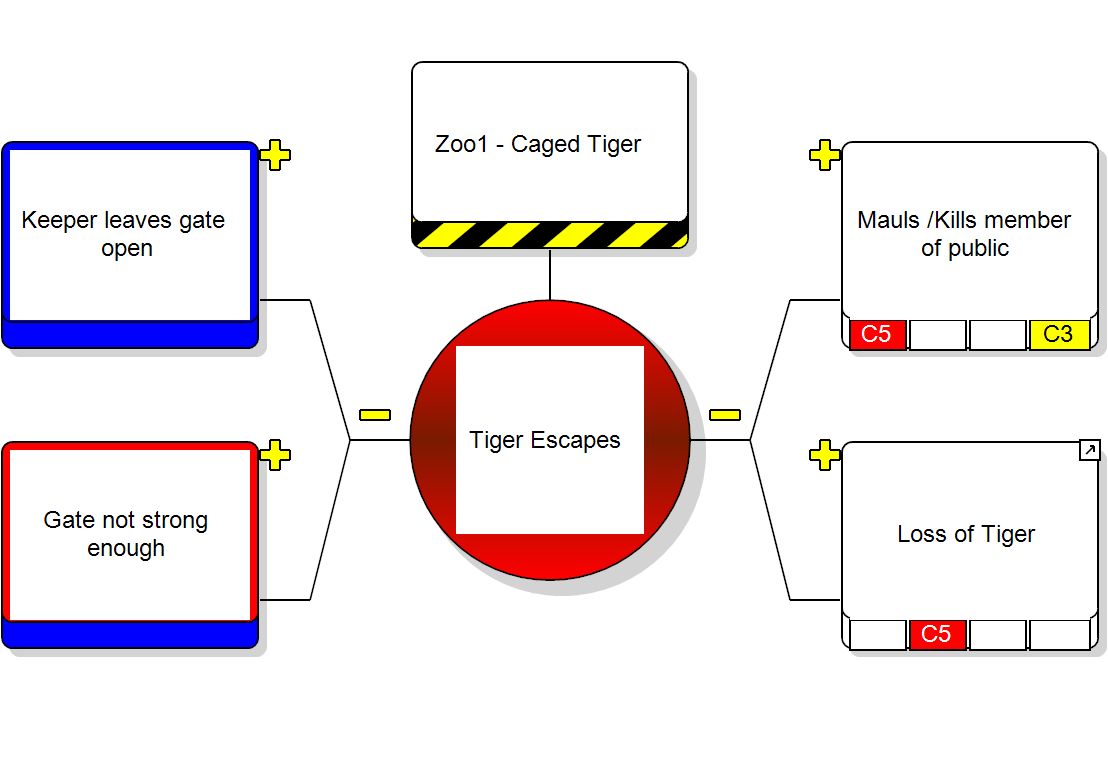
Bowtie is particularly effective in workshop settings, where teams can review risks, validate existing barriers, and demonstrate how safety measures are implemented and maintained.
How Does Bowtie Work?
The bowtie model is built around several core elements that together create a complete safety risk picture. At the centre of the model are:
- Hazard – A task, activity, or situation with the potential to cause harm or damage.
- Top Event – The loss of control or release of the hazard.
From this central point, the model expands in two directions:
- Threats – Direct causes that could lead to the top event.
- Consequences – The outcomes that may result if the top event occurs.
Controls (or barriers) are then identified to manage these risks:
| Left Side (Prevention) | Right Side (Recovery / Mitigation) |
|---|---|
| Preventative measures that eliminate threats or stop them from causing the top event. | Measures that reduce the likelihood or severity of consequences once the top event has occurred. |
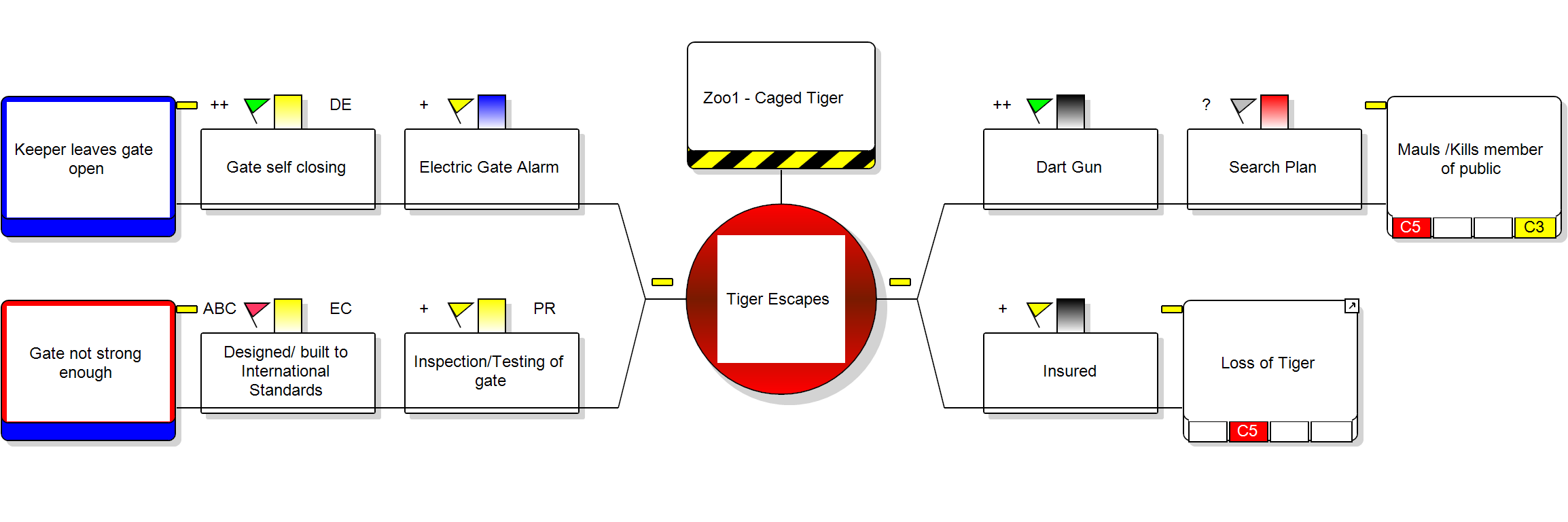
The model also considers escalation factors — conditions that may weaken or defeat a control. Additional controls can be assigned to manage these escalation factors.
Attributes such as control effectiveness or criticality may also be incorporated, allowing the bowtie to support evaluation within a broader Safety Management System (SMS).
What Does Bowtie Show?
Bowtie is a powerful visual tool that illustrates the relationship between hazards, threats, controls, and consequences. It provides a structured view of how safety barriers prevent incidents and mitigate outcomes.
Bowtie models support:
- Clear and graphic representation of risk
- Cross-domain risk visibility for internal and external stakeholders
- Improved awareness of key risk areas
- Operational and regulatory safety guidance
- Identification of critical controls and assessment of their effectiveness
- Development of Safety Performance Indicators (SPIs) to monitor control performance
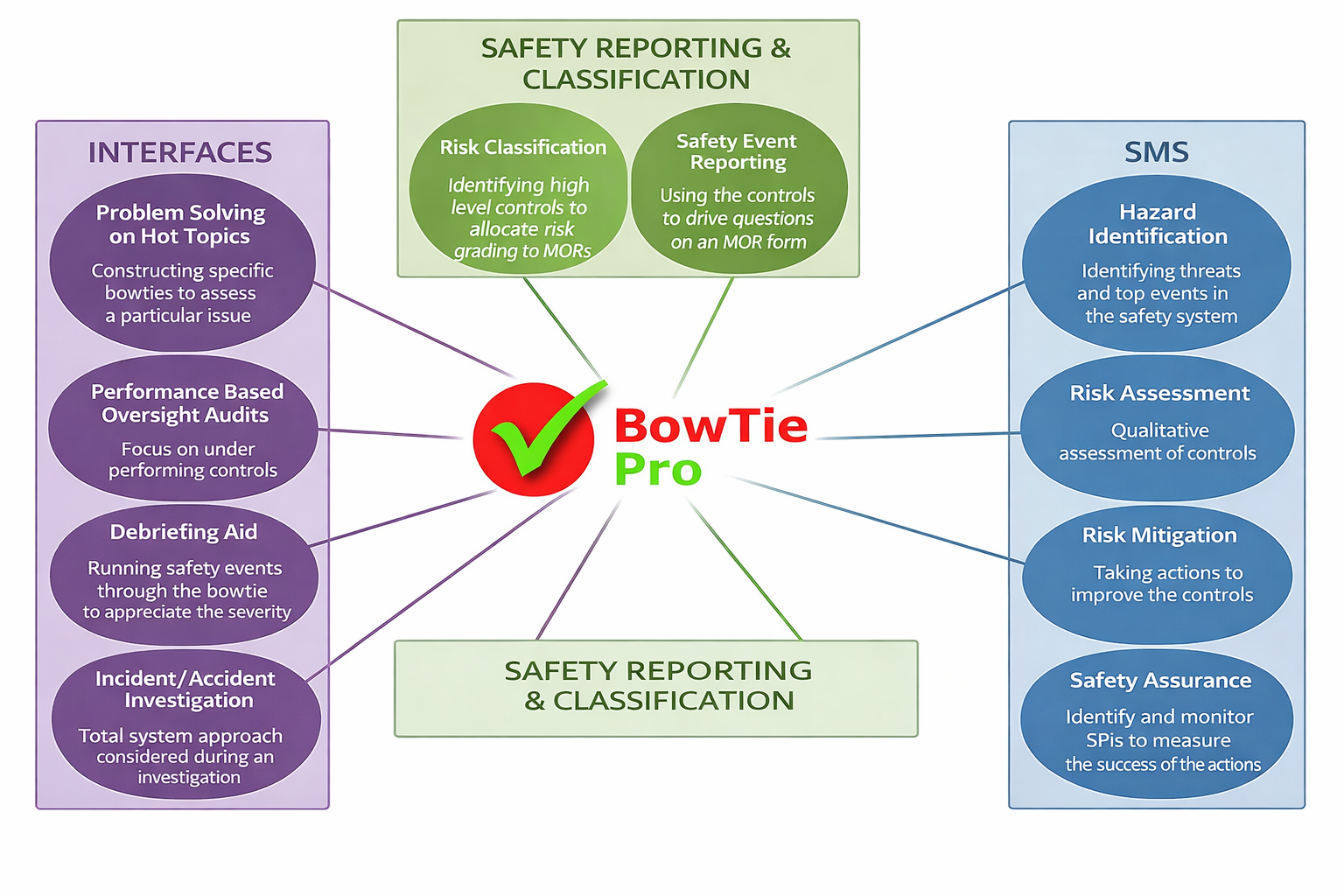
Bowtie can be applied to a variety of tasks, including proactive risk assessments, safety case development, training, incident analysis, and regulatory demonstration.
Where did Bowtie come from?
The bowtie methodology originated from a simplified combination of fault tree analysis and event tree analysis.
During the 1990s, the oil and gas industry formalised and expanded its practical application as a way to better understand and manage major risks. Since then, the approach has been adopted across numerous sectors including defence, healthcare, finance, mining, and aviation.
A Barrier-Based Approach to Risk
The safety community is familiar with Professor James Reason’s “Swiss cheese” model of accident causation. Bowtie provides a practical, visual representation of this barrier-based concept.
It demonstrates how multiple layers of protection prevent incidents, and how weaknesses in those layers can allow failures to occur. The model also aligns with Safety Management Manual processes that emphasise the importance of protective barriers.
Bowtie not only identifies existing controls but also examines how those controls might fail (through escalation factors) and how those failures are managed. This provides valuable insight into an organisation’s overall risk mitigation strategy and resource allocation.
The barrier-based approach is particularly effective as a qualitative risk assessment tool, offering practical value in complex and dynamic operational environments. It can be used both proactively (risk assessment) and reactively (incident classification and analysis).
Which industries uses Bowtie?
Bowtie analysis can benefit any sector, but it is particularly valuable in high-hazard and complex operational environments where understanding threats, controls, and consequences is critical.
The following sectors frequently apply bowtie methodology:
- Oil & Gas (Upstream, Midstream, Downstream)
- Chemical & Process Industries
- Mining & Resources
- Aviation
- Construction & Infrastructure
- Rail & Transport
- Healthcare
- Utilities & Energy (Power Generation, Water)
- Defence & Security
Why do these sectors benefit most
Industries benefit most when they have:
- High-consequence, low-frequency risks
- Complex systems with multiple safeguards
- Regulatory or safety case requirements
- A need for clear visual communication of controls
- Critical control or barrier management programs